Service

Indigenous-led land reclamation in Alberta and across Canada

Osprey Environmental Solutions is a majority Indigenous-owned environmental consulting firm headquartered in Edmonton, Alberta, working with clients across Canada. We reclaim land disturbed by oil and gas, pipeline, powerline and highway projects, taking each site from evaluation and planning through soil work, revegetation and monitoring until it meets the reclamation standard of the province it's in, such as equivalent land capability in Alberta. We're a Certified Indigenous Business through the Canadian Council for Indigenous Business (CCIB).
Land reclamation

What is land reclamation?

Land reclamation returns disturbed land to a stable, productive state that can support its intended use again. In Alberta, the Environmental Protection and Enhancement Act (EPEA) and the Conservation and Reclamation Regulation require operators to reclaim specified land, including well sites, pipelines, and batteries, to an equivalent land capability.

Equivalent land capability means the land can support uses similar to the ones it supported before the disturbance, even if the individual uses aren't identical. For energy sites, the Alberta Energy Regulator (AER) issues a reclamation certificate once it's satisfied that the work meets that standard. Until then, the liability stays with the operator.

Reclamation and remediation are different jobs. Remediation treats contamination in soil or water. Reclamation rebuilds the landscape, soils and vegetation. Many sites need both before they can be certified.

How our land reclamation process works


We run reclamation in three stages, with one team from the first site visit to a certification-ready site.
land-reclamation-stage-1

Stage 1

Site evaluation and planning

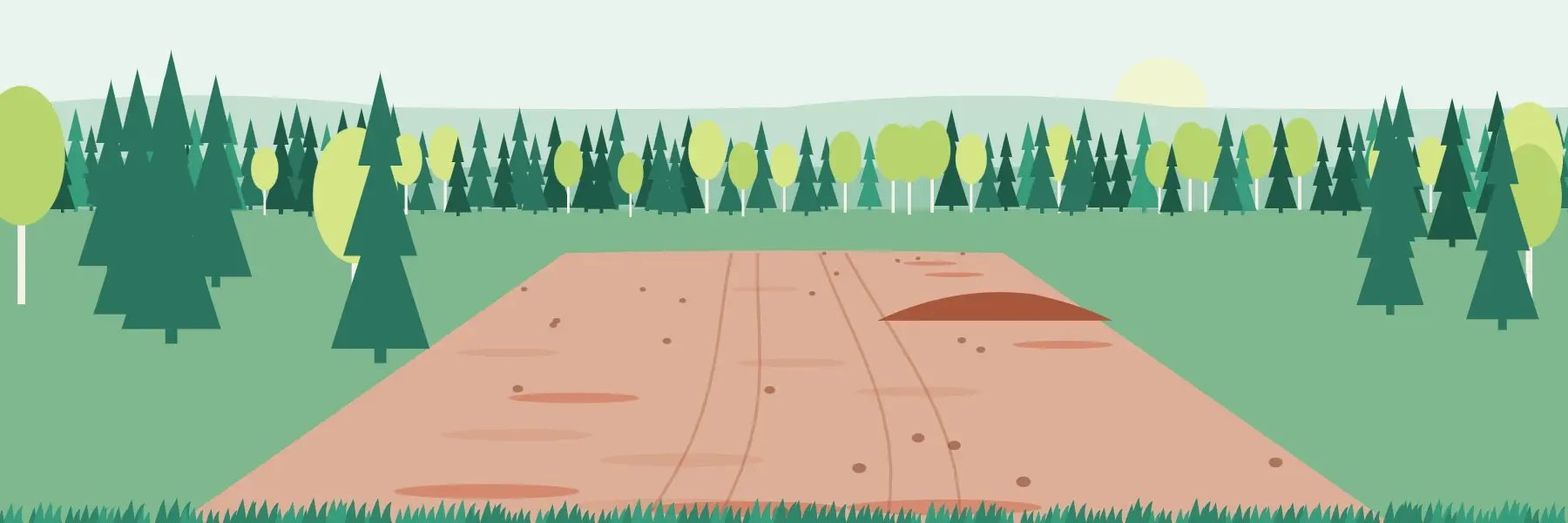
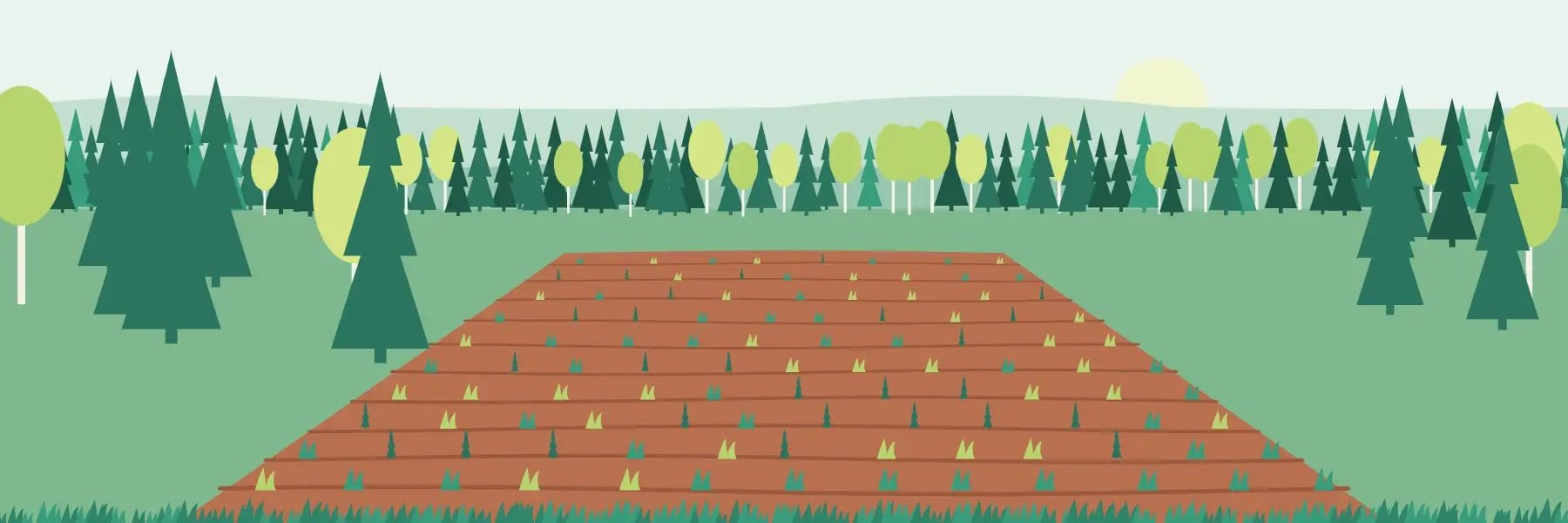
We assess the disturbance, soils, drainage and surrounding vegetation, then set targets against the criteria for the site's land type. Alberta's 2010 Reclamation Criteria for Wellsites and Associated Facilities set separate standards for cultivated lands, forested lands and native grasslands, with a peatlands document revised in 2017. Drone imagery and Geographic Information Systems (GIS) mapping give us a measured baseline to compare against later. Traditional Ecological Knowledge (TEK) also shapes the targets, so the plan reflects what the land supported before it was disturbed.
land-reclamation-stage-2

Stage 2

Soil work and revegetation

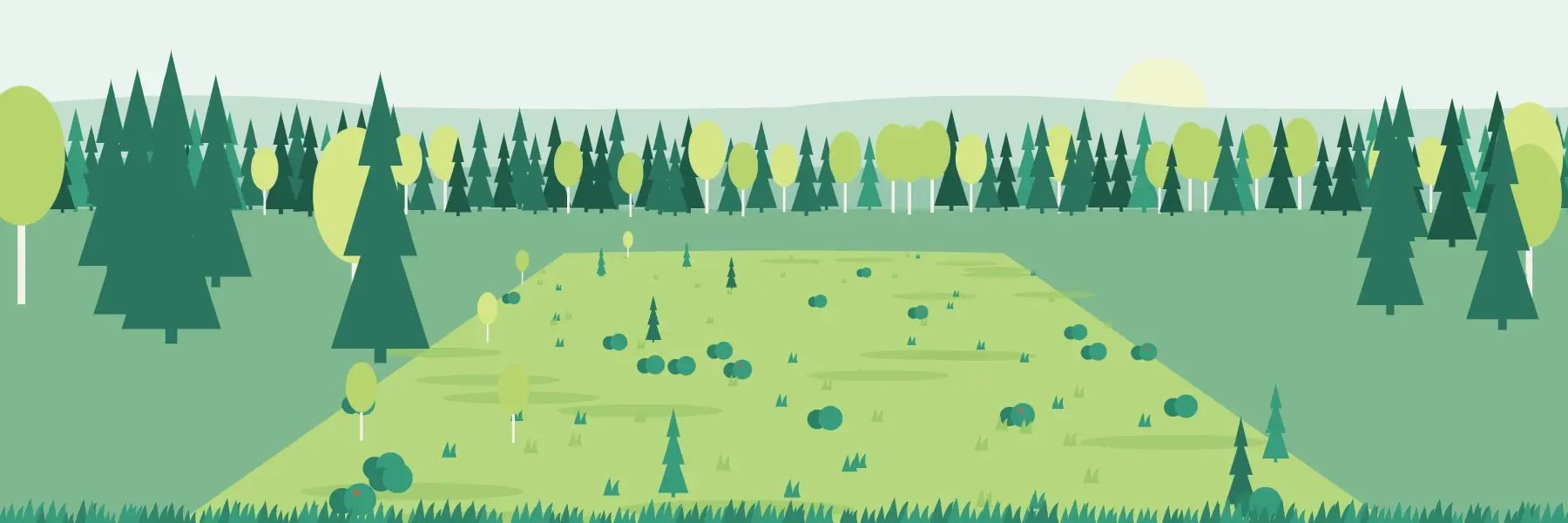
We carry out the plan: soil work to rebuild a stable, workable surface, then revegetation with species suited to the site and the surrounding ecosystem. On forested land, the 2010 criteria require woody vegetation with both an overstory and an understory, so species selection plans for trees, shrubs, and ground cover.
land-reclamation-stage-3

Stage 3

Monitoring through to certification

We monitor each site throughout the growing seasons until soils and vegetation meet the criteria, using field assessments and GeoAI-enhanced mapping to track change consistently over time. Results are documented as we go, so the evidence is ready when the reclamation certificate application is prepared.
How reclamation rules differ across Canada

Each province sets its own reclamation rules, so the standard a site must meet depends on its location. In British Columbia, the BC Energy Regulator (BCER) issues a Certificate of Restoration once an abandoned wellsite has been restored to meet regulatory requirements. In Saskatchewan, the Ministry of Energy and Resources oversees reclamation of licensed well and facility sites through its Acknowledgement of Reclamation (AOR) program.

On First Nation reserve lands, oil and gas reclamation falls under federal oversight. Indian Oil and Gas Canada (IOGC) approves remediation and reclamation work under the Indian Oil and Gas Act, and final reclamation applications go to both IOGC and the First Nation.

Who we reclaim land for

We work with clients across Canada from our head office in Edmonton, Alberta. Reclamation standards are set provincially, so we work to the requirements of the province where the site is.

Oil and gas operators

With inactive and abandoned wellsites to retire. Under Alberta's Liability Management Framework, the AER can set closure spending targets for licensees, and every site waiting on a reclamation certificate keeps capital tied up.

Highway and road proponents

Reclaiming land disturbed during construction.

Pipeline and powerline operators

Reclaiming rights-of-way and associated facilities along their corridors. 

Government agencies

With disturbed public land to return to productive use.

Why Indigenous-led reclamation

Reclamation decides what grows back on a site for decades, so the targets matter as much as the techniques. We build Traditional Ecological Knowledge (TEK) into planning from the start, so reclaimed sites support the vegetation, wildlife, and cultural uses valued by local First Nations, while meeting provincial criteria. Community members lead the TEK work, starting with our own Indigenous team members, and then our field and mapping teams build around it.

If your project needs a formal values assessment first, our Indigenous values assessment and integration service identifies those values before reclamation planning starts.

CCIB - 2026 - Osprey

We're majority Indigenous-owned and CCIB certified

Osprey Environmental Solutions is majority Indigenous-owned. We launched in September 2025 as a partnership between Kee Tas Kee Now Sawmills Limited (KSL) and Silvacom. KSL is owned by five First Nations: Loon River First Nation, Lubicon Lake Band, Peerless Trout First Nation, Whitefish Lake First Nation and Woodland Cree First Nation. Silvacom, established in 1983, brings expertise in natural resources, regulatory, and remote sensing.

Our CCIB certification gives procurement and ESG teams a verifiable Indigenous-ownership credential, not a subcontracted line item. Every project supports training, employment and capacity for KSL's five member Nations.

Our related services


Linear restoration

Restoring seismic lines and other linear disturbances, including in caribou range.

Indigenous values assessment and integration

Identifying traditional and cultural values and building them into project plans.

Environmental mapping

GeoAI-enhanced mapping for site baselines and monitoring.

Construction monitoring and environmental field services

On-site compliance monitoring and field assessment through construction.

Frequently asked questions

Land reclamation FAQs

What is land reclamation, and how long does it take?

Land reclamation returns disturbed land to a stable, productive state that can support its intended use again. Each province sets its own standard. There's no fixed timeline. A site is ready for regulatory sign-off when its soils and vegetation meet the criteria for its land type, which depends on how many growing seasons it takes to revegetate. Forested sites must re-establish trees and shrubs, so they usually take longer than cultivated land. Large mines can take decades.

What's the difference between land reclamation and remediation?

Remediation treats contamination, removing or managing harmful substances so a site meets environmental standards. Reclamation restores the landscape, soils, and vegetation so that disturbed land can again support its intended use. Many oil and gas sites need both before a regulator will sign off, such as the Alberta Energy Regulator (AER) issuing a reclamation certificate.

What is abandoned well site reclamation, and who is responsible for it?

In Alberta, once a well is abandoned, the surface lease must be reclaimed to an equivalent land capability and certified by the AER. The licensee is responsible for that work, and under Alberta's Liability Management Framework, the AER can set closure spending targets. If no responsible licensee remains, the site is orphaned, and the industry-funded Orphan Well Association handles closure. After certification, operators of wells, pipelines and batteries can still be ordered to fix surface reclamation for up to 25 years. Contamination liability continues after the issuance of the reclamation certificate unless a remediation certificate has been issued for that release. In British Columbia, the BC Energy Regulator (BCER) issues a Certificate of Restoration instead, and on First Nation reserve lands, Indian Oil and Gas Canada (IOGC) approves the reclamation work.

How does Traditional Ecological Knowledge shape Osprey's reclamation work?

Traditional Ecological Knowledge (TEK) informs how we evaluate land health, set reclamation targets and choose species. That means reclaimed sites are planned to support the vegetation, wildlife and cultural uses valued by local First Nations, alongside meeting provincial reclamation criteria. Community members lead the TEK work, starting with member Nation team members.

Is Osprey an Indigenous-owned land reclamation company?

Yes. Osprey Environmental Solutions is a majority Indigenous-owned environmental consulting firm headquartered in Edmonton, Alberta, working with clients across Canada. We're a partnership between Kee Tas Kee Now Sawmills Limited (KSL), owned by five First Nations, and Silvacom. We're a Certified Indigenous Business through the Canadian Council for Indigenous Business (CCIB), which gives procurement teams a verifiable Indigenous-ownership credential.

Talk to us about a reclamation project

Tell us where the site is, what disturbed it and where it sits in the closure process. We'll walk you through what it'll take to reach certification.